
Oxygen Cylinder Rental vs Purchase
Oxygen Cylinder Rental vs Purchase: Which Option Is Better for You?
Choosing between oxygen cylinder rental and purchase depends on your budget, duration of use, oxygen requirements, and long-term plans. Both options offer different benefits, making it important to understand their costs, convenience, and responsibilities before making a decision. Whether you need an oxygen cylinder for home healthcare, a hospital, a clinic, or an industrial application, selecting the right option can help you manage expenses and ensure access to suitable equipment.
Oxygen cylinder rental is a practical choice for customers who need a cylinder for a limited period. Instead of paying the full purchase price, you pay a rental fee for an agreed duration. Depending on the supplier, rental services may also offer delivery, pickup, maintenance support, and cylinder replacement. These services can reduce the initial financial commitment and make rental a convenient option when the duration of use is uncertain.
Purchasing an oxygen cylinder may be more suitable for customers who require regular access to oxygen over an extended period. Once purchased, the cylinder belongs to the buyer and can be retained for future use, subject to applicable safety and inspection requirements. Although the initial investment is generally higher, ownership eliminates recurring rental fees. However, the buyer remains responsible for oxygen refills, maintenance, inspections, and other applicable expenses.
When comparing rental and purchase options, it is important to consider the total cost rather than focusing only on the initial payment. Rental expenses accumulate over time, while purchasing involves an upfront cost followed by ongoing expenses for refilling and maintenance. The more frequently a cylinder is used, the more important it becomes to evaluate long-term costs and refill arrangements.
Compare Your Requirements Before Making a Decision
Consider the following factors before selecting an option:
Duration of use: Rental may suit short-term needs, while purchasing may suit regular long-term requirements.
Available budget: Rental generally requires less money upfront, whereas purchasing requires a higher initial payment.
Maintenance and servicing: Check who is responsible for inspections, repairs, and replacement.
Refill availability: Ensure that a suitable oxygen supply is available when required.
Total cost: Compare rental charges or purchase price along with refills, accessories, delivery, and maintenance.
For medical oxygen requirements, consult a healthcare professional to determine the appropriate equipment and oxygen supply. Always use medical-grade oxygen and equipment intended for medical use.
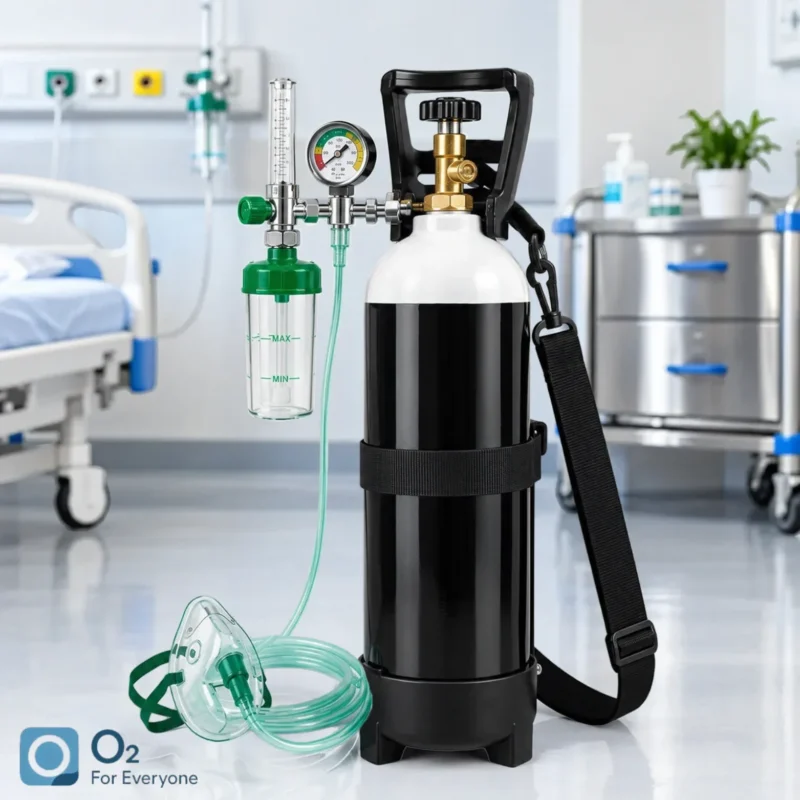
Oxygen Cylinder Rental vs Purchase Comparison Table
The following table compares the key factors to consider before making your decision.
Oxygen Cylinder Rental Table
S.No. | Comparison Factor | Oxygen Cylinder Rental | Details |
|---|---|---|---|
1 | Payment Method | Daily, weekly or monthly | Pay according to the rental plan offered by the supplier. |
2 | Initial Investment | Generally low | No need to purchase the entire cylinder upfront. |
3 | Security Deposit | May be required | The deposit amount and refund conditions depend on the rental agreement. |
4 | Cylinder Ownership | Rental provider | The cylinder must be returned according to the agreed terms. |
5 | Rental Duration | Flexible, depending on availability | Suitable for temporary requirements or a specified period. |
6 | Oxygen Refilling | Included or charged separately | Confirm refill prices and availability before booking. |
7 | Maintenance | As per rental agreement | The provider may handle certain maintenance responsibilities. |
8 | Cylinder Replacement | Subject to provider terms | Replacement depends on availability and the supplier’s policy. |
9 | Delivery Service | May be available | Delivery charges and service areas vary by supplier. |
10 | Pickup Service | May be available | Confirm whether collection charges apply when returning the cylinder. |
11 | Accessories | Depends on rental package | Regulators, flowmeters, trolleys and other accessories may cost extra. |
12 | Long-Term Expenses | Recurring rental fees | Total expenditure increases with the rental period and additional charges. |
13 | Short-Term Requirements | Suitable | Useful when a cylinder is needed for a limited period. |
14 | Long-Term Requirements | Depends on total cost | Compare cumulative rental fees against the cost of purchasing a cylinder. |
15 | Storage Responsibility | User or facility | The cylinder must be stored safely while in use. |
16 | Safety Documentation | Must be verified | Check cylinder condition, inspection records and suitability for the intended use. |
17 | Return Conditions | Governed by the agreement | Minimum rental periods, notice requirements and damage charges may apply. |
18 | Best Suited For | Temporary medical care or project-based requirements | The cylinder type must match the intended application. |
19 | Budget Planning | Lower upfront expense | Plan for rental fees, deposits, refills and delivery charges. |
20 | Main Advantage | Lower initial financial commitment | Avoids the need to purchase equipment for short-term use. |
Oxygen Cylinder Purchase Table
S.No. | Comparison Factor | Oxygen Cylinder Purchase | Details |
|---|---|---|---|
1 | Payment Method | One-time purchase | Pay the agreed price to acquire the cylinder. |
2 | Initial Investment | Generally high | The full purchase price is paid upfront. |
3 | Security Deposit | Usually not required | An outright purchase generally does not require a rental security deposit. |
4 | Cylinder Ownership | Buyer | The cylinder belongs to the purchaser, subject to the sale terms. |
5 | Usage Duration | Long-term ownership | Retain the cylinder for future use, subject to inspection and safety requirements. |
6 | Oxygen Refilling | Arranged separately | Refill charges depend on cylinder capacity, supplier and oxygen requirements. |
7 | Maintenance | Buyer’s responsibility | The owner must arrange required servicing and inspections. |
8 | Cylinder Replacement | Arranged by the owner | Repair or replacement expenses depend on the condition of the cylinder. |
9 | Delivery Service | Depends on the seller | Check transportation costs and delivery availability before ordering. |
10 | Pickup Service | Usually not applicable as a rental return | Transportation may still be required for refilling, servicing or inspection. |
11 | Accessories | Depends on the package | Confirm whether regulators, flowmeters, trolleys and other accessories are included. |
12 | Long-Term Expenses | Refills and upkeep | There is no recurring rental fee, but operating and maintenance costs continue. |
13 | Short-Term Requirements | May be less economical | The purchase price may be difficult to justify for brief use. |
14 | Long-Term Requirements | May offer better value | Compare the purchase price and ongoing costs with cumulative rental expenses. |
15 | Storage Responsibility | Buyer or facility | Safe storage and handling remain the owner’s responsibility. |
16 | Safety Documentation | Must be verified | Check certification, inspection records, working pressure and cylinder condition. |
17 | Return Conditions | Subject to seller policy | Returns, refunds and warranty coverage depend on the purchase terms. |
18 | Best Suited For | Regular home-care, clinical or industrial requirements | The cylinder and gas supply must be suitable for the intended application. |
19 | Budget Planning | Higher initial expense | Budget for the purchase, refills, accessories, inspections and maintenance. |
20 | Main Advantage | Ownership and future availability | The cylinder can be retained for repeated use without ongoing rental fees. |
Rental vs Purchase: B-Type & D-Type Oxygen Cylinder Comparison
Choosing between renting and purchasing an oxygen cylinder depends on your medical needs, duration of use, and budget. Renting is often suitable for short-term oxygen requirements, while purchasing may be a practical option for regular, long-term use.
B-Type Oxygen Cylinder: Rental vs Purchase
Feature | Rental | Purchase |
|---|---|---|
Initial Cost | Low upfront cost | Higher one-time cost |
Monthly Charges | Rental fees apply | No rental fees |
Cylinder Capacity | Typically around 1,500 litres, depending on model | Same capacity based on selected model |
Portability | Easier to manage due to smaller size | Convenient for regular use if storage is available |
Short-Term Use | Ideal for temporary requirements | Less economical for brief use |
Long-Term Use | Rental expenses accumulate over time | May be economical with frequent use |
Maintenance | May be covered by the supplier | Owner bears applicable maintenance costs |
Refilling | Based on the rental agreement | Pay for each refill |
Replacement | Subject to supplier policy | Owner arranges repair or replacement |
Best For | Short-term home care and temporary oxygen needs | Regular home use and repeated requirements |
D-Type Oxygen Cylinder: Rental vs Purchase
Feature | Rental | Purchase |
|---|---|---|
Initial Cost | Lower upfront investment | Higher one-time investment |
Monthly Charges | Rental fees apply | No rental fees |
Cylinder Capacity | Typically around 7,000 litres, depending on model | Same capacity based on selected model |
Portability | Requires more effort to move due to larger size | Better suited to stationary use or trolley-assisted movement |
Short-Term Use | Suitable for temporary high-capacity requirements | Higher initial expense for occasional use |
Long-Term Use | Long-term rental costs can accumulate | May be economical with frequent use |
Maintenance | May be covered by the supplier | Owner bears applicable maintenance costs |
Refilling | Based on the rental agreement | Pay for each refill |
Replacement | Subject to supplier policy | Owner arranges repair or replacement |
Best For | Hospitals, clinics and temporary high-capacity requirements | Hospitals, clinics and regular high-capacity requirements |
Emergency Oxygen Cylinder Rentals
Contact us to enquire about oxygen cylinder availability, rental charges, security deposits, refill costs, and delivery services. Our team will help you understand the available options so you can make an informed decision based on your needs and budget.
Oxygen Cylinder Rental vs Purchase: A Detailed Comparison
Selecting between renting and buying an oxygen cylinder depends on your budget, expected duration of use, and ongoing oxygen requirements. The comparison below outlines the major differences in cost, ownership, maintenance, and convenience to help you choose the option that best suits your needs.
Understanding Oxygen Cylinder Rental
Oxygen cylinder rental allows you to use a cylinder for an agreed period without purchasing the equipment outright. You pay a rental fee according to the provider’s terms and return the cylinder when you no longer need it.
This option can be useful for temporary medical care, post-hospital recovery, short-term projects, and certain industrial or commercial applications where oxygen cylinders are required for a limited period.
Benefits of Renting an Oxygen Cylinder
Lower upfront expense: You generally avoid paying the full purchase price at the beginning.
Flexible duration: Rental periods may be available for days, weeks, or months, depending on the supplier.
Reduced ownership responsibilities: Certain maintenance or replacement services may be handled by the provider under the agreement.
Convenient return: You can return the cylinder when the requirement ends, subject to the agreed conditions.
Suitable for temporary requirements: Renting can be practical when the duration of use is uncertain.
Things to Check Before Renting
Before choosing a rental service, ask the provider about the rental fee, refundable security deposit, refill availability, delivery and pickup charges, cylinder condition, and return policy.
Also verify whether the cylinder is suitable for your intended application. Medical oxygen and industrial oxygen have different requirements and must not be treated as interchangeable.
Understanding Oxygen Cylinder Purchase
Purchasing an oxygen cylinder means paying for the equipment and retaining ownership. It may be appropriate for customers who expect to use the cylinder repeatedly over an extended period.
Hospitals, clinics, eligible home-care users, laboratories, and certain industrial facilities may prefer ownership when they have predictable demand and the arrangements needed for refilling, inspection, and safe storage.
Benefits of Purchasing an Oxygen Cylinder
Long-term availability: You retain the cylinder for future use.
No recurring rental fee: Once purchased, you do not pay a rental fee for the owned cylinder.
Greater control over usage: You can arrange refills according to your needs and supplier availability.
Potential long-term value: Ownership may cost less than continuous rental when the cylinder is used over a sufficiently long period.
Asset ownership: The cylinder remains your property, subject to applicable regulations and ownership terms.
Things to Consider Before Purchasing
The initial purchase price is only one part of the total cost. You should also account for oxygen refills, transportation, regulator and accessory requirements, periodic inspection, servicing, and eventual replacement.
Before purchasing, confirm the cylinder’s capacity, working pressure, certification, condition, compatibility with the intended equipment, and availability of a suitable refill provider.
Oxygen Cylinder Rental vs Purchase
Compare the costs and key features to choose the right option for your needs.
Oxygen Cylinder Rental
Flexible and cost-effective for short-term needs
Rental Price
₹700 / 7 days
Refill Cost
Per refill
Security Deposit
Refundable, subject to terms
Maintenance & Replacement
As per rental agreement
Oxygen Cylinder Purchase
Ideal for regular and long-term use
Purchase Price
One-time cylinder purchase
Refill Cost
No Recurring Rental Fee
You own the cylinder
Accessories
Regulator, flowmeter, trolley etc. sold separately
Cylinder cost comparison (before refills)
Based on the listed D-Type oxygen cylinder prices shown above.
This comparison shows cylinder cost before refills.
It excludes refills, delivery charges, accessories and refundable deposit.
Prices may change. Confirm availability and delivery charges with O2 For Everyone before ordering.
Compare Your Estimated Costs
Compare oxygen cylinder rental and purchase costs using O2 For Everyone's listed prices. Adjust your requirements to estimate your total expenses.
This amount is shown separately because the deposit may be refundable when the cylinder is returned in acceptable condition.
Rental price: D-Type: ₹700 for 7 days or ₹3,000 for 30 days.
Estimates exclude refundable deposits and delivery charges. Monthly rental is calculated using 30-day periods, with a proportional charge for the remaining days. Refill count should be based on actual usage. Accessories, inspection, taxes or other charges may apply. Rental and purchase availability and prices can change. Confirm the final quote with O2 For Everyone. This calculator does not determine medical oxygen needs.
View Rental Options View Purchase OptionRental vs Purchase: Advantages and Disadvantages
Comparison Factor | Oxygen Cylinder Rental: Advantages | Oxygen Cylinder Rental: Disadvantages | Oxygen Cylinder Purchase: Advantages | Oxygen Cylinder Purchase: Disadvantages |
|---|---|---|---|---|
Initial Cost | Lower upfront investment | Security deposit and initial rental fees may apply | One-time purchase provides ownership | Higher initial investment |
Monthly Expenses | Suitable for short-term budgets | Rental fees continue for the duration of use | No recurring rental fees | Refilling and maintenance costs continue |
Duration of Use | Ideal for temporary requirements | Long rental periods can become expensive | Suitable for regular, long-term use | May be less economical for short-term needs |
Ownership | No need to own the equipment | Cylinder must be returned according to the agreement | Full ownership of the cylinder | Owner is responsible for its condition |
Maintenance | Certain maintenance services may be included | Services depend on rental terms | Complete control over maintenance arrangements | Inspection and maintenance are the owner’s responsibility |
Oxygen Refilling | Supplier may offer refill services | Refills may cost extra or require separate arrangements | Freedom to arrange refills with suitable suppliers | Owner must manage refill availability and expenses |
Replacement | Provider may arrange replacement under agreed conditions | Replacement depends on availability and policy | Owner can arrange replacement when necessary | Repair or replacement may involve additional costs |
Flexibility | Convenient when requirements change | Minimum rental periods or return conditions may apply | Equipment remains available for future use | Equipment may remain unused when requirements end |
Delivery | Rental providers may offer delivery and pickup | Delivery and collection charges may apply | Some sellers provide delivery services | Transportation may need to be arranged separately |
Accessories | Some rental packages include accessories | Additional accessories may cost extra | Accessories can be selected according to requirements | Suitable accessories may increase the purchase cost |
Budget Planning | Lower initial financial commitment | Recurring expenses require ongoing budgeting | Purchase cost is known upfront | Additional operating expenses must be budgeted |
Long-Term Value | Useful when the requirement is temporary | Total rental cost increases over time | May offer better long-term value with regular use | Savings depend on purchase price, refills and maintenance |
Convenience | Less responsibility for equipment ownership | Dependence on supplier availability and service | Greater control over equipment availability | More responsibility for servicing and storage |
Best Suited For | Temporary home care, short-term recovery and project-based requirements | Less attractive when rental continues for a long period | Regular home-care, clinical or industrial requirements | Less suitable when the equipment is needed only briefly |
Note: Actual rental inclusions, purchase prices, refill charges, and maintenance responsibilities vary by supplier. For medical oxygen, always choose equipment suitable for medical use and follow your healthcare professional’s instructions.
Frequently Asked Questions
1. Is renting an oxygen cylinder cheaper than purchasing one?
Renting often costs less upfront. Purchasing may become more economical over a longer period, depending on the purchase price, rental fee, refill charges, and maintenance expenses.
2. Can I rent an oxygen cylinder for a few days?
Some suppliers offer short-term rentals, while others require a minimum rental period. Confirm availability, deposit requirements, and delivery charges with the provider.
3. Is purchasing an oxygen cylinder better for long-term use?
It can be a suitable choice when you expect repeated use and have reliable refill access. For medical oxygen therapy, your clinician should help determine the appropriate equipment and supply arrangement.
4. Does oxygen cylinder rental include refilling?
Not always. Some providers offer refill services separately, while others may include certain services in their rental package. Ask for a written breakdown of all charges.
5. What is included when I purchase an oxygen cylinder?
The package depends on the seller. Confirm whether the price includes a regulator, flowmeter, trolley, accessories, delivery, inspection documentation, or an initial oxygen fill.
6. Which oxygen cylinder size is suitable for home use?
The suitable oxygen cylinder size depends on the patient’s prescribed oxygen flow rate, duration of use, and medical requirements. Consult a healthcare professional before selecting a cylinder.
7. How long does a B-Type oxygen cylinder last?
The duration depends on the cylinder’s oxygen capacity and prescribed flow rate. Higher flow rates consume oxygen faster, so the actual usage time may vary.
8. How long does a D-Type oxygen cylinder last?
A D-Type oxygen cylinder generally has a larger oxygen capacity than a B-Type cylinder. Its running time depends on the available oxygen and prescribed flow rate.
9. What documents are required to rent a medical oxygen cylinder?
A medical oxygen cylinder rental provider may request a valid doctor’s prescription or hospital discharge summary. Requirements can vary by provider.
10. Is home delivery available for oxygen cylinder rentals?
Some suppliers offer home delivery for rented oxygen cylinders. Delivery availability, charges, and return arrangements depend on your location and the supplier’s service terms.
11. Can I return a rented oxygen cylinder whenever I want?
Return conditions depend on the rental agreement. Some suppliers may require notice, a minimum rental period, or payment of outstanding charges.
12. Do I need to pay a security deposit for oxygen cylinder rental?
Some providers require a refundable security deposit. The amount and refund conditions vary, so confirm them before booking.
13. Which option is best for home oxygen therapy?
The correct choice depends on the prescribed oxygen flow, duration of use, equipment type, and supply reliability. A healthcare professional should guide the equipment decision. A standard oxygen cylinder may not meet every patient’s needs.
14. Can I use an industrial oxygen cylinder for medical purposes?
Do not assume that industrial oxygen or industrial equipment is suitable for medical use. Medical applications require an appropriate oxygen supply, compatible equipment, and suitable handling procedures.
15. What should I compare before choosing a supplier?
A regulator and other accessories may need to be purchased or arranged separately. Confirm whether the rental or purchase package includes the regulator, flow meter, and required accessories.
16. Do I need to arrange an oxygen regulator separately?
Compare the total rental or purchase price, refill charges, cylinder specifications, safety documentation, delivery availability, maintenance arrangements, and customer support.
17. Can I extend my oxygen cylinder rental period?
Many suppliers allow customers to extend their rental period, subject to their terms and availability. Contact your supplier before the agreed return date to confirm extension charges.
18. What happens if the rented oxygen cylinder becomes empty?
You may need to arrange an oxygen refill through your supplier. Check the refill price, availability, and delivery charges before renting a cylinder.
19. Is a medical oxygen cylinder suitable for emergency backup at home?
A medical oxygen cylinder may be used as backup when prescribed by a healthcare professional. Ensure it contains sufficient oxygen and has compatible equipment. Follow your clinician’s instructions for emergency use.
20. What safety checks should I perform before using an oxygen cylinder?
Check the cylinder’s condition, pressure gauge, regulator connections, and signs of leakage. Keep oxygen cylinders away from flames, smoking, oil, and grease. Use medical oxygen only as directed by a healthcare professional.