
Oxygen Concentrator Rental vs Purchase
Oxygen Concentrator Rental vs Purchase: Which Option Is Right for You?
Choosing between oxygen concentrator rental and purchase depends on your budget, expected duration of use, medical requirements, and long-term plans. Both options can provide access to oxygen therapy equipment, but they differ in upfront costs, maintenance responsibilities, flexibility, and overall expenses. An oxygen concentrator is an electrically powered medical device that draws in surrounding air, concentrates the oxygen, and delivers it to the user through prescribed equipment. It is commonly used for home oxygen therapy when recommended by a healthcare professional. Renting allows you to use a machine for an agreed period without paying the full purchase price, while buying gives you ownership of the equipment.
For customers who need oxygen support temporarily, renting may be a convenient option. People who expect to require the same equipment over a longer period may find purchasing worth considering. The right decision depends on the prescribed oxygen flow, machine specifications, expected duration of therapy, service availability, and total cost of ownership. At O2 For Everyone, understanding the differences between rental and purchase options can help you make an informed decision about your oxygen concentrator requirements.
Compare Your Requirements Before Making a Decision
Before choosing between renting and purchasing an oxygen concentrator, consider your oxygen therapy requirements, expected duration of use, budget, and maintenance needs. Renting may be a practical option for short-term recovery or temporary medical support, while purchasing can be more economical for long-term use. Consider these important factors before making your decision:
-
Duration of Use: Estimate how long you will need the oxygen concentrator to compare the total rental cost with the purchase price.
-
Initial Budget: Renting generally requires a lower upfront payment, while purchasing involves a higher initial investment.
-
Oxygen Flow Rate: Choose a machine that meets the flow rate prescribed by your healthcare professional, such as 5 LPM or 10 LPM, where appropriate.
-
Maintenance and Servicing: Check whether servicing, technical support, and replacement equipment are included in the rental plan or covered under the purchase warranty.
-
Electricity and Backup: Oxygen concentrators require electricity to operate. Consider power backup options and discuss an appropriate emergency oxygen plan with your healthcare provider.
-
Portability and Usage: Consider where the machine will be used, how frequently it will operate, and whether a portable or stationary model is suitable.
-
Long-Term Value: Compare the total cost of renting for your expected usage period against the purchase price, including maintenance and other applicable charges.
Our Recommendation: If you need an oxygen concentrator for a short period, renting may offer greater flexibility. If you expect to use the machine for an extended period, purchasing may provide better long-term value. Always consult your healthcare professional before selecting an oxygen concentrator or changing your prescribed oxygen settings.
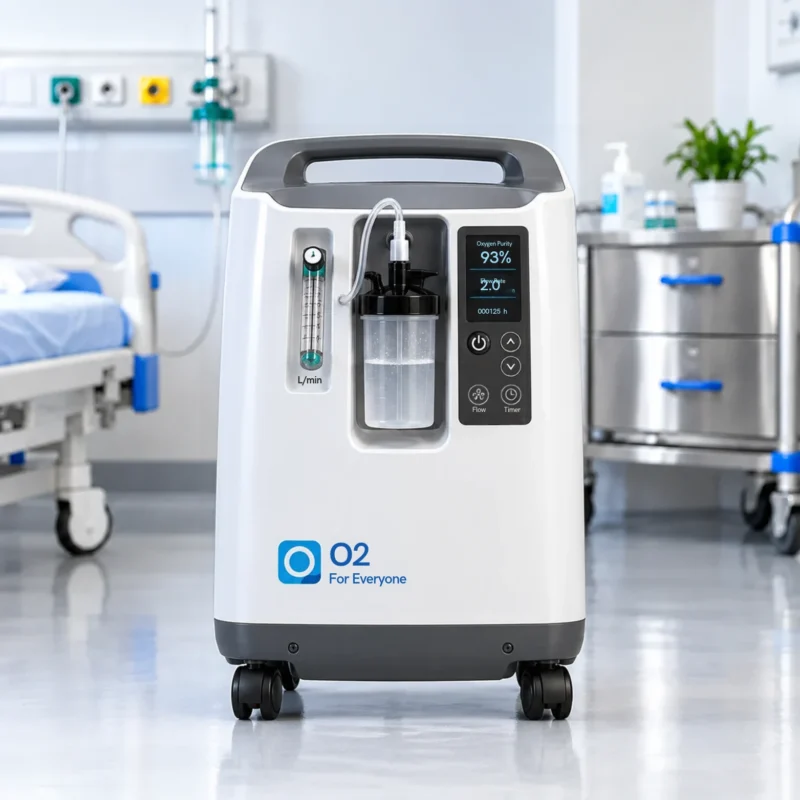
Oxygen Concentrator Rental vs Purchase Comparison Table
The following table compares the key factors to consider before making your decision.
1. Oxygen Concentrator Rental
|
S.No. |
Comparison Factor |
Details |
|---|---|---|
|
1 |
Initial Cost |
Lower upfront cost |
|
2 |
Payment Method |
Monthly or short-term rental |
|
3 |
Best For |
Temporary oxygen therapy needs |
|
4 |
Maintenance |
Depends on the rental provider’s terms |
|
5 |
Servicing Support |
May be included in the rental plan |
|
6 |
Ownership |
Machine remains the provider’s property |
|
7 |
Flexibility |
Easy to return after use |
|
8 |
Long-Term Cost |
Can increase with extended rental periods |
|
9 |
Machine Replacement |
May be available as per rental terms |
|
10 |
Ideal Usage |
Short-term recovery or temporary medical support |
2. Oxygen Concentrator Purchase
|
S.No. |
Comparison Factor |
Details |
|---|---|---|
|
1 |
Initial Cost |
Higher upfront investment |
|
2 |
Payment Method |
One-time payment or available financing |
|
3 |
Best For |
Long-term oxygen therapy needs |
|
4 |
Maintenance |
Owner is generally responsible |
|
5 |
Servicing Support |
Depends on warranty and service policy |
|
6 |
Ownership |
Machine belongs to the buyer |
|
7 |
Flexibility |
Available for use whenever required |
|
8 |
Long-Term Cost |
May be economical over extended use |
|
9 |
Machine Replacement |
Usually requires warranty support or a separate purchase |
|
10 |
Ideal Usage |
Regular, long-term use at home |
Rental vs Purchase: 5 LPM & 10 LPM Oxygen Concentrator Comparison
Compare rental and purchase options for 5 LPM and 10 LPM oxygen concentrators based on cost, maintenance, and duration of use. Choose the right option according to your budget, long-term needs, and prescribed oxygen requirements.
1. 5 LPM Oxygen Concentrator — Rental vs Purchase
|
S.No. |
Comparison Factor |
Rental |
Purchase |
|---|---|---|---|
|
1 |
Initial Investment |
Lower initial payment; suitable for short-term requirements. |
Higher upfront investment to own the machine. |
|
2 |
Payment Structure |
Usually available on daily, weekly, or monthly rental plans, depending on the provider. |
Generally a one-time payment; financing may be available. |
|
3 |
Best Suited For |
Temporary home oxygen support or short-term medical recovery when prescribed. |
Long-term home oxygen therapy when ongoing use is expected. |
|
4 |
Machine Capacity |
5 LPM model, subject to availability. |
5 LPM model selected according to prescribed requirements. |
|
5 |
Oxygen Flow Rate |
The machine’s maximum rated flow is generally up to 5 litres per minute. |
The machine’s maximum rated flow is generally up to 5 litres per minute. |
|
6 |
Monthly Expense |
Recurring rental charges apply for every rental period. |
No recurring rental fee after purchase, but maintenance and operating costs remain. |
|
7 |
Maintenance Responsibility |
Depends on the rental agreement; confirm servicing and repair coverage. |
Usually the owner’s responsibility, subject to warranty terms. |
|
8 |
Technical Support |
Provider support may be available during the rental period. |
Support depends on the seller, service network, and warranty. |
|
9 |
Machine Replacement |
A replacement may be provided if covered by the provider’s policy. |
Replacement generally requires warranty coverage or a separate purchase. |
|
10 |
Ownership |
The machine remains the rental provider’s property. |
The buyer owns the machine. |
|
11 |
Duration Flexibility |
Convenient when the required duration is uncertain or limited. |
More suitable when the machine is expected to be used over an extended period. |
|
12 |
Return Policy |
The machine can generally be returned according to the rental agreement. |
No rental return process; resale or return depends on the seller’s policy. |
|
13 |
Electricity Requirement |
Requires a suitable electricity supply during operation. |
Requires a suitable electricity supply during operation. |
|
14 |
Backup Planning |
Discuss backup oxygen arrangements with your healthcare provider in case of a power failure or machine breakdown. |
The same backup planning is necessary; ownership does not remove the need for emergency arrangements. |
|
15 |
Accessories |
Cannulas, tubing, humidifier bottles, and other accessories may be included or charged separately. |
Accessories may be included in the package or purchased separately. |
|
16 |
Warranty Coverage |
The provider’s rental service terms determine coverage. |
Manufacturer warranty applies according to its terms and exclusions. |
|
17 |
Hygiene and Cleaning |
Confirm cleaning, disinfection, and maintenance procedures before receiving the machine. |
Follow the manufacturer’s cleaning and filter-maintenance instructions. |
|
18 |
Long-Term Value |
Extended rental periods can result in higher cumulative costs. |
May be more economical over time, depending on purchase price, service costs, and usage duration. |
|
19 |
Availability |
Depends on local stock, delivery area, and rental duration. |
Depends on model availability, seller stock, and delivery location. |
|
20 |
Overall Recommendation |
Consider when you need flexibility and lower upfront costs. |
Consider when you expect long-term use and prefer ownership. |
2. 10 LPM Oxygen Concentrator — Rental vs Purchase
|
S.No. |
Comparison Factor |
Rental |
Purchase |
|---|---|---|---|
|
1 |
Initial Investment |
Lower initial payment compared with buying the machine outright. |
Higher upfront investment to own the machine. |
|
2 |
Payment Structure |
Daily, weekly, or monthly plans may be available depending on the supplier. |
Usually a one-time payment, with financing options depending on the seller. |
|
3 |
Best Suited For |
Temporary requirements when a healthcare professional has prescribed a suitable high-flow-capacity concentrator. |
Long-term requirements when a healthcare professional recommends this capacity. |
|
4 |
Machine Capacity |
10 LPM model, subject to availability. |
10 LPM model selected according to the prescribed oxygen requirement. |
|
5 |
Oxygen Flow Rate |
The rated maximum flow is generally up to 10 litres per minute; actual performance depends on the model. |
The rated maximum flow is generally up to 10 litres per minute; check the manufacturer’s specifications. |
|
6 |
Monthly Expense |
Recurring rental charges apply throughout the rental period. |
No recurring rental fee, but servicing, repairs, and operating expenses may apply. |
|
7 |
Maintenance Responsibility |
Check whether routine servicing, repairs, and technical support are included. |
The owner generally arranges maintenance, subject to warranty and service agreements. |
|
8 |
Technical Support |
Support may be available from the rental provider during the contract period. |
Support depends on the manufacturer’s service network and seller’s policies. |
|
9 |
Machine Replacement |
Replacement depends on stock availability and the rental provider’s terms. |
Replacement is subject to warranty provisions or a separate purchase. |
|
10 |
Ownership |
The machine remains the provider’s property. |
The buyer owns the machine. |
|
11 |
Duration Flexibility |
Useful for temporary use or when the duration is uncertain. |
May be suitable for regular, extended use. |
|
12 |
Return Policy |
Return the machine according to the agreed rental conditions. |
Resale or return depends on the seller’s policy and the machine’s condition. |
|
13 |
Electricity Requirement |
Requires electricity; consumption varies by model and operating conditions. |
Requires electricity; check the machine’s rated power consumption before buying. |
|
14 |
Backup Planning |
Arrange an appropriate backup plan with your healthcare provider for power outages or equipment failure. |
A backup plan is equally important for an owned machine. |
|
15 |
Accessories |
Check whether tubing, cannulas, humidifier bottles, and other accessories are included. |
Confirm included accessories and the cost of additional supplies. |
|
16 |
Warranty Coverage |
Coverage is determined by the provider’s service and rental agreement. |
Manufacturer warranty and exclusions apply according to the purchase terms. |
|
17 |
Hygiene and Cleaning |
Ask the supplier about disinfection, filter checks, and preparation before delivery. |
Follow manufacturer instructions for cleaning and maintenance. |
|
18 |
Long-Term Value |
Long-term rental charges may add up, so compare the total cost over the expected period. |
Could provide better long-term value, depending on the purchase price and ongoing expenses. |
|
19 |
Availability |
Depends on local rental stock, delivery service, and model availability. |
Depends on the seller’s inventory and service coverage. |
|
20 |
Overall Recommendation |
Consider for temporary use when the prescribed treatment requires a 10 LPM-capacity model. |
Consider for extended use when the prescribed treatment requires a 10 LPM-capacity model. |
Oxygen Concentrator Rental vs Purchase
Compare 5 LPM and 10 LPM oxygen concentrator rental and purchase options to understand costs, maintenance, and long-term value. Contact our team to check availability, pricing, and support to find an option that suits your needs and budget.
Oxygen Concentrator Rental vs Purchase: A Detailed Comparison
Rent an oxygen concentrator for flexible, short-term use without paying the full purchase price upfront. It can be a practical option for temporary oxygen therapy, depending on your medical needs.
Understanding Oxygen Concentrator Rental
Oxygen concentrator rental allows you to use a machine for a specified period without purchasing the equipment outright. You pay a rental fee according to the provider’s terms and return the machine when your requirement ends.
This option can be useful for temporary home oxygen therapy, post-hospital recovery, short-term medical support, and situations where the duration of use is uncertain.
Benefits of Renting an Oxygen Concentrator
-
Lower upfront expense: Avoid paying the full purchase price at the beginning.
-
Flexible duration: Rental plans may be available for days, weeks, or months, depending on the provider.
-
Service support: Maintenance or technical assistance may be included under the rental agreement.
-
Convenient return: Return the machine when your requirement ends, subject to the agreed conditions.
-
Suitable for temporary needs: Renting can be practical when the expected duration of use is limited.
Things to Check Before Renting
Before renting, confirm the monthly charges, security deposit, delivery fees, servicing policy, and replacement arrangements. Check whether accessories are included and whether the machine is suitable for your prescribed oxygen flow rate. Also, confirm the provider’s cleaning and disinfection procedures before use.
Understanding Oxygen Concentrator Purchase
Purchasing an oxygen concentrator means paying for the equipment and retaining ownership. It may be appropriate for customers who expect to use the machine regularly over an extended period and prefer to own their equipment.
Home-care users and families with ongoing prescribed oxygen therapy needs may prefer ownership when they have considered the initial cost, maintenance requirements, electricity supply, and available service support.
Benefits of Purchasing an Oxygen Concentrator
-
Long-term availability: Keep the machine available for future use according to medical advice.
-
No recurring rental fee: Once purchased, you do not pay a rental fee for the owned machine.
-
Greater control over usage: Use the equipment as needed within the manufacturer’s operating guidelines.
-
Potential long-term value: Ownership may cost less than continuous rental over a sufficiently long period.
-
Asset ownership: The machine remains your property, subject to applicable terms and regulations.
Things to Consider Before Purchasing
The initial purchase price is only one part of the total cost. Consider warranty coverage, servicing expenses, replacement filters, accessories, electricity consumption, and after-sales support. Check the machine’s specifications, rated flow capacity, and suitability for your prescribed oxygen requirements before making a decision.
Oxygen Concentrator Rental vs Purchase
Compare 5 LPM and 10 LPM oxygen concentrators to find the right option for your needs.
Oxygen Concentrator Rental
Flexible and convenient for temporary needs
Oxygen Concentrator Purchase
Suitable for long-term equipment ownership
Oxygen Concentrator Cost Comparison
Compare one month's rental with the purchase price.
Illustrative prices only. Actual rental fees, purchase prices, deposits, delivery, electricity, servicing and accessories may vary by supplier and model. Compare the complete costs before making a decision.
Compare Your Estimated Costs
Compare oxygen concentrator rental and purchase costs. Adjust the duration and expenses to estimate your total cost.
Calculating estimated costs...
Note: These are estimates, not a quotation. Actual costs depend on the supplier's rental billing rules, delivery charges, warranty, maintenance, accessories and other fees. Electricity costs are not included.
Rental vs Purchase: Advantages and Disadvantages
1. Oxygen Concentrator Rental — Advantages and Disadvantages
|
S.No. |
Advantages |
Disadvantages |
|---|---|---|
|
1 |
Lower Initial Cost: Requires less upfront investment than purchasing a machine. |
Recurring Rental Fees: Payments continue throughout the rental period. |
|
2 |
Flexible Duration: Suitable for short-term or temporary oxygen therapy requirements. |
Long-Term Expense: Extended rental periods may cost more than purchasing. |
|
3 |
Maintenance Support: Servicing may be included, depending on the rental agreement. |
Service Limitations: Maintenance and repair coverage depends on the provider’s terms. |
|
4 |
Easy Return: The machine can be returned when it is no longer required. |
Return Conditions: Deposit deductions or additional charges may apply under the agreement. |
|
5 |
No Long-Term Ownership: Avoids the responsibility of owning equipment that may only be needed temporarily. |
No Ownership: The machine must generally be returned after the rental period. |
|
6 |
Replacement Assistance: A replacement machine may be available if the provider offers this service. |
Availability Concerns: Replacement depends on stock and provider policies. |
|
7 |
Lower Initial Commitment: Useful when the expected duration of use is uncertain. |
Rental Terms: Minimum rental periods or deposits may apply. |
|
8 |
Convenient Access: Rental providers may offer delivery and setup assistance. |
Additional Charges: Delivery, accessories, or setup may cost extra. |
2. Oxygen Concentrator Purchase — Advantages and Disadvantages
|
S.No. |
Advantages |
Disadvantages |
|---|---|---|
|
1 |
Long-Term Ownership: The machine remains yours after purchase. |
Higher Initial Cost: Requires a larger upfront investment. |
|
2 |
No Rental Payments: There are no recurring rental fees for the owned machine. |
Maintenance Expenses: Servicing and repairs may create additional costs. |
|
3 |
Long-Term Value: May be more economical when the machine is needed for an extended period. |
Break-Even Period: Savings depend on purchase price, rental rates, and maintenance costs. |
|
4 |
Availability: Keep the machine at home for use as medically prescribed. |
Storage Requirements: You need suitable space to store and operate the equipment. |
|
5 |
Usage Flexibility: Use the machine according to its operating instructions and prescribed treatment plan. |
Limited Portability: Some models are bulky and may be difficult to move. |
|
6 |
Warranty Protection: Eligible repairs may be covered during the manufacturer’s warranty period. |
Warranty Limitations: Some parts, damage, or servicing may not be covered. |
|
7 |
Model Selection: Choose a suitable model based on prescribed flow requirements and features. |
Research Required: You must compare specifications, quality, and service availability. |
|
8 |
Potential Resale Value: The machine may retain some resale value, depending on its condition and market demand. |
Depreciation: Its value may decrease over time, and resale may be difficult. |
Frequently Asked Questions
1. Is it better to rent or buy an oxygen concentrator?
Renting may be suitable for short-term oxygen therapy, while purchasing may be more economical for long-term use. Compare rental fees, purchase price, maintenance costs, and your expected duration of use before deciding.
2. What is the difference between renting and purchasing an oxygen concentrator?
Renting allows you to use a machine for a specified period by paying rental charges. Purchasing means you own the equipment and are responsible for its maintenance after the applicable warranty coverage.
3. How much does it cost to rent an oxygen concentrator in India?
The rental cost depends on the machine’s capacity, rental duration, supplier, and included services. Contact the provider for current monthly charges, security deposits, delivery fees, and maintenance terms.
4. What is the price of an oxygen concentrator in India?
Oxygen concentrator prices vary according to capacity, brand, features, and warranty. Compare the purchase price of 5 LPM and 10 LPM models and check the availability of after-sales service before buying.
5. What is the difference between a 5 LPM and a 10 LPM oxygen concentrator?
A 5 LPM model is rated for flow rates up to 5 litres per minute, while a 10 LPM model is designed for higher flow requirements. The appropriate model depends on the patient’s prescribed oxygen flow and the device’s specifications.
6. Can I rent a 5 LPM oxygen concentrator for home use?
Yes, some suppliers offer 5 LPM oxygen concentrators for rental. Confirm availability, rental duration, delivery arrangements, and whether the machine meets the patient’s prescribed oxygen requirements.
7. When should I consider a 10 LPM oxygen concentrator?
A 10 LPM concentrator may be considered when a healthcare professional prescribes a flow rate or treatment that requires a compatible high-capacity device. Check the manufacturer’s specifications and clinical suitability before selecting a model.
8. Is renting an oxygen concentrator cheaper than buying one?
Renting generally requires less upfront expenditure, but repeated rental payments can add up over time. Buying may offer better long-term value depending on the purchase price, duration of use, and maintenance expenses.
9. What costs should I compare before renting or buying?
Compare the monthly rental fee, purchase price, security deposit, delivery charges, electricity consumption, maintenance, accessories, and repair costs. Check which charges are refundable and which are additional expenses.
10. Is a security deposit required when renting an oxygen concentrator?
Some rental providers require a refundable security deposit, while others may have different payment terms. Confirm the deposit amount, refund timeline, and any conditions that could lead to deductions before renting.
11. Does oxygen concentrator rental include maintenance and servicing?
Maintenance and servicing depend on the rental provider’s agreement. Ask whether routine servicing, technical support, repairs, and replacement equipment are included in the quoted rental price.
12. What maintenance is required for a purchased oxygen concentrator?
Maintenance may include cleaning the exterior, caring for filters, checking accessories, and arranging servicing according to the manufacturer’s instructions. Follow the user manual and warranty conditions, and use authorised service support when required.
13. Does an oxygen concentrator require refilling like an oxygen cylinder?
No. An oxygen concentrator draws in ambient air and concentrates oxygen using its internal system, so it does not require cylinder refills. It does require an appropriate power supply and routine maintenance.
14. Does an oxygen concentrator work during a power cut?
Most standard home oxygen concentrators require electricity to operate. A power interruption can stop oxygen production, so discuss an appropriate backup oxygen arrangement with a healthcare professional and follow the prescribed emergency plan.
15. Can I use a rented oxygen concentrator for long-term oxygen therapy?
Rental may be available for extended periods, depending on the supplier’s terms. If long-term oxygen therapy is prescribed, compare ongoing rental costs with ownership costs and confirm that the selected machine is medically suitable.
16. Can I return a rented oxygen concentrator before the rental period ends?
Early returns depend on the provider’s rental agreement. Ask about minimum rental periods, notice requirements, partial-month charges, deposit refunds, and any early-return fees before confirming your booking.
17. What should I check before purchasing an oxygen concentrator?
Check the prescribed flow requirement, oxygen output specifications, warranty, maintenance support, power consumption, noise level, accessories, and availability of replacement parts. Purchase from a reliable supplier and request the manufacturer’s documentation.
18. Are oxygen concentrators suitable for travel?
Travel suitability depends on the specific model, power requirements, portability, and transport rules. Check whether the device is approved for the intended mode of travel and arrange suitable power and backup oxygen according to medical advice.
19. Can I switch from renting to purchasing an oxygen concentrator later?
You may be able to switch, depending on the supplier’s policies. Ask whether the provider offers a purchase option, whether any rental payments can be credited towards the purchase price, and how the rental deposit will be handled.
20. How can I choose the right oxygen concentrator rental or purchase plan?
Compare your expected duration of use, total cost, machine specifications, maintenance coverage, warranty, and supplier support. Consult a healthcare professional to confirm the appropriate equipment and oxygen settings before making a decision.